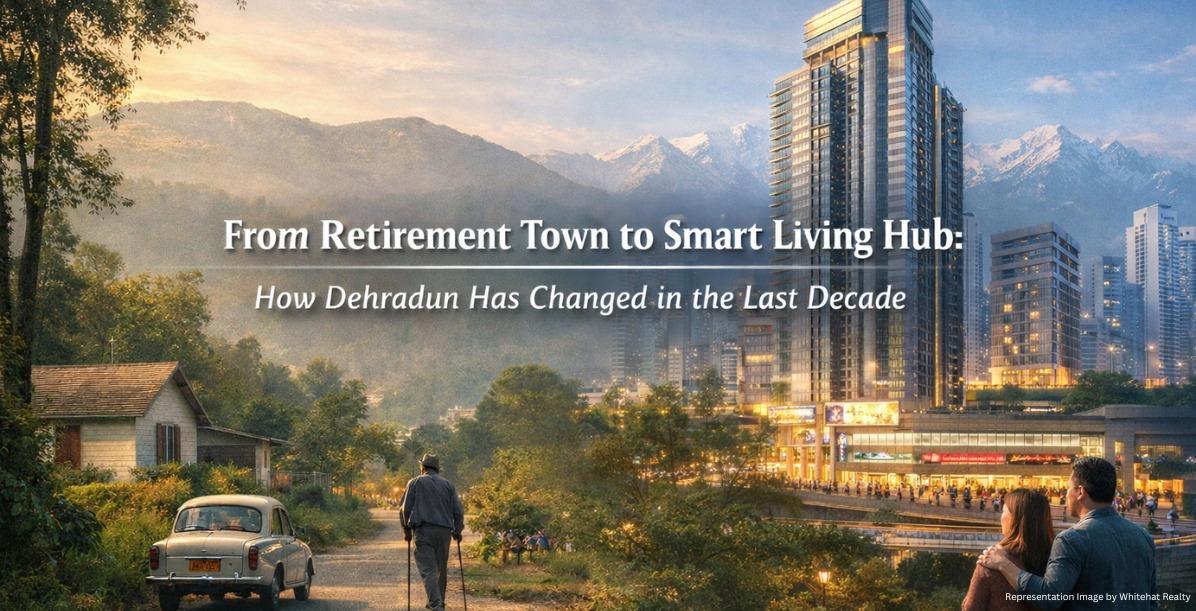
From Retirement Town to Smart Living Hub: How Dehradun Has Changed in the Last Decade

whitehat realty By : Whitehat Realty

06 Feb 2026

From Retirement Town to Smart Living Hub
  • FAQs

FAQs

A decade ago, Dehradun was known for its calm pace of life, pleasant climate, and low congestion. Retired defence officers, teachers, and senior bureaucrats preferred it for peaceful living away from metro chaos.

Dehradun has evolved into a smart living hub with modern villas, tech-enabled apartments, and eco-friendly homes. The shift reflects changing lifestyles, smarter planning, and new housing expectations rather than sudden urbanisation.

Smart living in Dehradun focuses on practical comfort, not flashy gadgets. It includes energy-efficient systems, climate-responsive design, smart security, and home automation that quietly improves everyday life.

Rising energy costs, climate awareness, and the need for easier maintenance pushed buyers toward homes that are cost-efficient, secure, and healthier to live in, especially in tier-2 cities like Dehradun.

Dehradun already had advantages like a favourable climate, greenery, and lower density. These factors made it easier to design homes that work with nature, reducing dependence on artificial cooling and lighting.

The city now attracts: Young professionals returning due to remote work NRIs investing in second homes Retired parents relocating closer to NCR-based families This created demand for peaceful yet future-ready homes.

Modern homes increasingly include: Passive design with natural light and ventilation Locally sourced materials Rainwater harvesting and solar panels Greywater recycling Sustainability here is about long-term savings and resilience, not just environmental branding.

Given its location in Seismic Zone IV and heavy monsoons, newer homes focus on: Earthquake-resistant RCC structures Advanced drainage and waterproofing Smart ventilation for humidity control This ensures durability alongside comfort.

No. While luxury projects adopted smart features first, mid-segment housing is now catching up. Smart and sustainable elements are increasingly seen as essentials rather than premium add-ons.

Smart homes support independent and dignified aging by enabling: Remote control of lighting and appliances Enhanced safety through automation Reduced reliance on physical assistance In a city popular for retirement living, these features are becoming necessities.